

5 End-Of-Season Awards Ideas for Sports Clubs

The honours cap hall of fame
If only last year’s player of the season would return their trophy. They said they lost it during the house move. The newcomer of the season did hand theirs back, but it came back rusted.
These organisational headaches make the end-of-season awards night feel like an afterthought, not a celebration of excellence.
But the players aren’t the problem here.
The trophy is.
When you gave Timmy the player of the season trophy, the same one handed out for the last decade, you told him he’d have to give it back in a year. You may have given him a medal too.
But you also told him, without meaning to, that his achievement has an expiry date.
So it’s no wonder that when the year’s up, the trophy is rusty, forgotten about or, even worse, still not engraved.
We’re not saying trophies have no place in sports clubs. They do. A club trophy that passes from winner to winner carries history, and we love that.
But the people who put blood, sweat and tears into the club deserve something they keep. The ones who stay after dark to look after the facilities, the ones who drive half the team to away games without being asked, and the ones who pile on the runs and win the club a league title.
In a year’s time, what will they have to show for it? What separates that season from every other season they’ve played?
All trophies look the same.
But not every achievement is.
That’s why more clubs are adding honours caps to their end-of-season awards. Here are five ways to do it.
#1 Honours caps for your season award winners
Honours caps, or presentation caps, whichever term you favour, have become a regular feature at the clubs we work with.
The simplest place to start is your existing award categories. Player of the season, batter and bowler of the season, young player, newcomer. Keep the club trophy if you like, but give every winner an honours cap that’s theirs for good.
When we ask clubs why they chose honours caps, the answer is always the same.
It’s unique. It reflects the achievement.
That’s because we don’t hand out ready-made caps. We design each of our custom honours caps around the club’s identity: your colours, your badge and the achievement itself, stitched with the award, the season and the player’s name.
It’s the same approach we took when Blackburn Rovers marked their 150th anniversary with honours caps. As the club put it: “We couldn’t be happier with the outcome and would highly recommend them as a trusted partner for premium, heritage-led projects.”
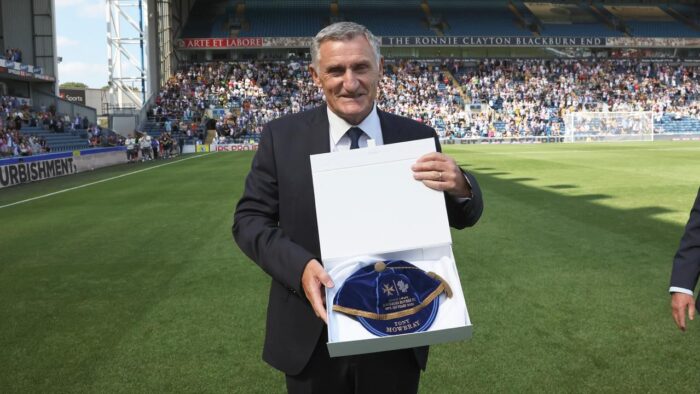
So when a player looks through their cabinet years from now, the cap tells them exactly what they won and when.
It’s distinctive. It’s bold. It’s personal.
Just like the achievement.
And unlike the trophy, it never has to be handed back. It’s made to be kept.
#2 Milestone caps
Not every achievement happens in one season. Some take years.
Fifty first-team appearances. A thousand league runs. A hundred wickets. Ten seasons of turning up every Saturday.
Milestones like these often pass with a quick mention in the club newsletter. Your awards night is the perfect stage to do them justice.
A milestone cap stitched with the number and the year it was reached gives long-serving players something the season awards rarely do: recognition for consistency, not just one standout year.
It also gives the younger players something to chase.
#3 Debut caps
International sides number their caps for a reason. A cap number tells a player they’ve joined a line that goes back generations.
Clubs can do the same.
Give each player who made their first-team debut this season a numbered debut cap, presented in front of the whole club. From that moment, they’re part of the club’s history.
High Wycombe CC’s Conner Haddow knows what that means. He was given debut cap number 82 at 14, and ten years on he still plays in it. “I think it’s all about the journey I’ve had from 14 to now,” he says. “I’ve done a lot of growing up with that cap on me.”
For Conner, the cap holds every win, every loss and every teammate who has come and gone. “It shows me everything I’ve accomplished up until this point.” You can read his full story in our debut baggy cap presentation feature.
If your club doesn’t have a cap register yet, the awards night is a good time to start one. Work back through the old scorebooks, or simply start the numbering this season.
#4 The club stalwart cap
A club is more than the players on the scorecard.
It’s the groundskeeper who’s out on the square at 7am. The scorer who’s never missed a match. The parent who runs the teas, and the volunteer who keeps the social media going.
These people rarely win the headline awards, yet the club wouldn’t run without them.
A club stalwart cap tells them the club sees what they do. And because it’s the same kind of cap the players receive, it says their contribution counts just as much.
#5 The champagne moment cap
Awards are great. The winners feel proud, and everyone else looks on in appreciation.
But what about the moments that don’t show up in the stats?
That’s what the champagne moment is for.
It doesn’t have to be the top run scorer or the best bowler. It doesn’t even have to be sport.
It could be the scorer who stepped in to play after a last-minute dropout. A committee member who moved heaven and earth to get a fixture on. Or a comment that had the dressing room in stitches for weeks.
Let the members vote for it, then present the winner with a champagne moment cap stitched with the season and the moment itself.
Because that’s what caps are about, and it’s what clubs are about too: togetherness, community and recognition.
It doesn’t need to be a record-breaking statistic. Just something that moved the club forward.
When to present your caps
The biggest mistake we see at awards nights is handing out every award in the first hour. Once the presentations are done, the room slowly empties.
Spread your caps through the evening instead. Present the debut caps early, the milestone and stalwart caps between courses, and save the season awards and the champagne moment for last.
Everyone has a reason to stay, and every presentation gets the room’s full attention.
Frequently asked questions
What is an honours cap?
An honours cap is a cap presented to a player to mark an achievement, such as a debut, a milestone or a season award. Unlike a perpetual trophy, the player keeps it.
Is a presentation cap the same as an honours cap?
Yes. Clubs use both terms for a cap presented in recognition of an achievement. Some use “presentation cap” for debuts and “honours cap” for awards, but the idea is the same.
Can you award caps for achievements off the pitch?
Yes. Club stalwart, long-service and champagne moment caps are all popular ways to recognise the volunteers, officials and members who never appear on the scorecard.
When should we order caps for our awards night?
As soon as your award categories are set. Every cap is designed for your club, so the earlier we hear from you, the more time there is to get the design right.
___
Planning your end-of-season awards night? Tell us your award categories and we’ll design honours caps your players keep for life. Get in touch today.